


Views: 0 Author: Site Editor Publish Time: 2026-08-17 Origin: Site


High-temperature steam applications demand exceptional flow control precision. Operating above 250°C (480°F), these dynamic systems face severe environmental challenges. Thermal shock, rapid expansion, and high-velocity erosion constantly threaten internal valve integrity. Standard concentric valves degrade rapidly in these harsh environments. Soft-seated options quickly fail under extreme heat and pressure. This rapid degradation leads to costly steam leaks, severe safety hazards, and unplanned operational downtime. Selecting the correct offset geometry paired with a robust actuator becomes strictly critical for sustained isolation. We provide engineers and procurement teams an evidence-based framework here. You will learn how to evaluate, specify, and integrate these advanced valves into complex industrial steam networks. We cover essential design criteria ranging from high-temperature seating materials to pneumatic torque multipliers. By following this guide, you ensure your steam isolation architecture remains safe, compliant, and highly reliable.
Triple Offset is Standard: For high-temperature steam, triple eccentric designs with metal-to-metal sealing offer the necessary friction-free operation and bidirectional zero-leakage.
Material Compatibility: Graphite-laminated metal seals and appropriate body metallurgy (e.g., WCB/CF8M) are mandatory for thermal stability.
Actuator Sizing Requires Multipliers: Pneumatic actuator sizing for steam must account for thermal expansion torque factors, not just standard media pressure.
Fail-Safe Architecture: Spring-return pneumatic actuation is heavily recommended to ensure system safety during air or power loss.
Standard concentric valves place the stem directly in the center of the disc. This configuration forces continuous rubbing between the disc edge and the rubber seat during operation. Dry steam completely lacks lubricating properties. Continuous metal-to-elastomer contact under dry conditions causes rapid friction wear. Soft seats quickly deform, blister, or tear away from the valve body. Consequently, concentric designs fail to maintain a reliable seal in steam applications.
Temperature fluctuations cause internal valve components to expand at dramatically different rates. The metal disc absorbs heat faster than the outer heavy-walled body. This differential expansion causes the disc to swell outward. In non-eccentric designs, this swelling wedges the disc tightly into the seat. Engineers frequently encounter severe jamming issues during system startup or shutdown. Operating personnel then struggle to manually force the jammed valve open, risking catastrophic mechanical damage.
Eccentric geometry solves these thermal expansion and friction problems mechanically. Moving the shaft out of the direct flow path minimizes seat rubbing significantly. The offset design allows the disc to swing clear of the seat immediately upon opening. This cam-like action reduces operating torque requirements. It also prevents the disc from dragging across the sealing surface. By eliminating friction, you drastically extend the operational lifecycle of the valve components.
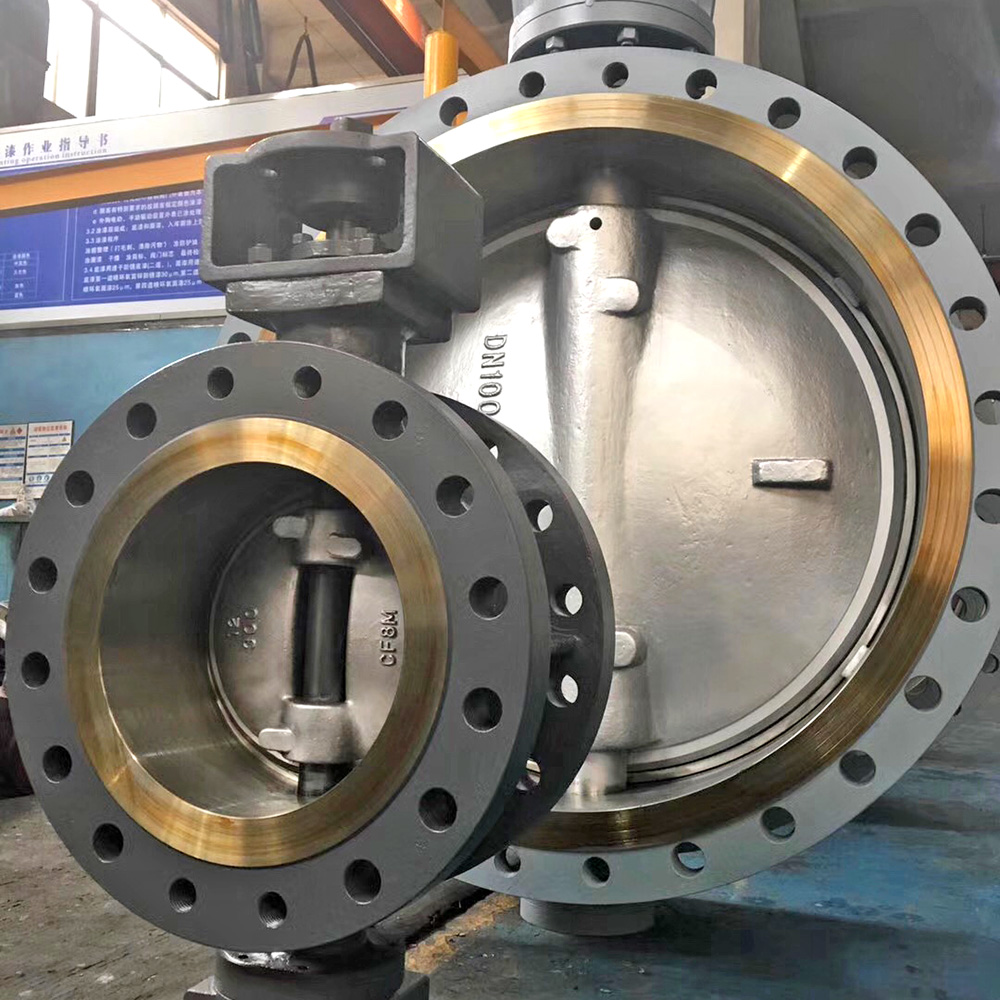
Double eccentric configurations utilize two distinct mechanical offsets. The shaft sits behind the disc and slightly to one side. This dual offset forces the disc to lift off the seat after a few degrees of rotation. It significantly reduces friction compared to concentric models.
However, double eccentric designs carry distinct limitations for industrial steam. They typically rely on PTFE, RTFE, or other reinforced polymer seats. These materials possess a hard upper temperature limit. PTFE seats begin to deform and extrude around 200°C to 250°C. Once deformation occurs, the valve loses its bidirectional sealing capability permanently.
Therefore, we consider double eccentric models suitable only for low-pressure, lower-temperature utility steam. They pose an unacceptable reliability risk for high-temperature superheated steam lines.
Triple eccentric designs introduce a third crucial geometric offset. Engineers machine the sealing profile into a distinct conical seating angle. This third offset completely eliminates all friction between the disc and the seat. The components only touch during the final fraction of a degree of closure.
This frictionless rotation provides massive engineering advantages. It allows manufacturers to utilize pure metal-to-metal seating profiles. Suppliers typically use stainless steel laminated with flexible graphite. This combination achieves true zero leakage (API 598 standards) even at extreme temperatures exceeding 400°C.
Ultimately, the triple offset geometry represents the definitive eccentric butterfly valve choice for critical steam isolation. It delivers unmatched thermal resilience and long-term shut-off reliability.
A true high temperature steam valve relies entirely on its internal sealing composition. You must carefully evaluate laminated disc seals against solid metal alternatives. Laminated seals alternate thin layers of SS316 with flexible graphite rings. The graphite provides necessary micro-yielding to fill surface imperfections. This composite approach handles thermal cycling far better than rigid solid metal seats.
You must also prioritize resistance to steam wire-drawing. Wire-drawing occurs when high-velocity steam escapes through microscopic seal gaps. The sheer velocity erodes the metal, cutting deep channels into the seat. Laminated graphite seals self-adjust during thermal shifts, effectively preventing the initial micro-leaks causing wire-drawing.
Valve body metallurgy must precisely match your specific steam profile. Standard carbon steel (WCB or WCC) functions perfectly for standard high-temperature utility steam. However, extreme superheated steam demands specialized alloy steels. Chrome-moly alloys like WC6 or WC9 resist high-temperature creep and hydrogen embrittlement far better than standard carbon steel.
Valve Body Metallurgy Selection Chart
Material Grade | Temperature Limit | Typical Steam Application |
|---|---|---|
WCB (Carbon Steel) | Up to 425°C (800°F) | Standard saturated steam, utility lines |
WC6 (Alloy Steel) | Up to 538°C (1000°F) | Superheated steam, power generation |
WC9 (Alloy Steel) | Up to 593°C (1100°F) | Extreme superheated steam, turbines |
CF8M (Stainless Steel) | Up to 538°C (1000°F) | Corrosive environments, clean steam |
Additionally, you must verify ASME/ANSI Class ratings. Ensure your selected 150#, 300#, or 600# class directly aligns with maximum piping design parameters, not just typical operating pressures.
Never specify steam valves without demanding verifiable testing certifications. Look specifically for API 609 compliance governing structural design dimensions. Demand testing documents proving API 598 or FCI 70-2 Class VI zero-leakage performance. Finally, ensure the valve holds an API 607 fire-safe certification to protect plant personnel during emergencies.
Pneumatic actuator sizing requires a specialized approach for thermal applications. You cannot simply calculate required torque using the maximum differential pressure (ΔP) alone. Engineers must add a robust safety factor, typically 20% to 30%, for any steam application.
Furthermore, you must meticulously account for thermal "breakaway torque." When a valve sits closed in a high-heat state for extended periods, the metals expand and bind slightly. Breaking this seal requires significantly more initial force than standard ambient operation. Failing to apply thermal torque multipliers results in stalled actuators during critical operations.
Choosing the correct pneumatic configuration determines your overall system safety. Double-acting actuators require compressed air to both open and close the disc. We rarely recommend double-acting units for critical steam lines due to their lack of a mechanical fail-safe.
Conversely, spring-return (single-acting) actuators remain essential for steam safety architectures. They utilize compressed air to open the valve and heavy mechanical springs to close it. If plant compressed air fails, the springs automatically drive the valve to a predefined "Fail-Closed" or "Fail-Open" position. This mechanical reliability prevents catastrophic runaway steam flow during power blackouts.
Radiant heat poses a severe threat to pneumatic components. The internal O-rings and diaphragms inside pneumatic actuators consist of standard NBR or Viton elastomers. These elastomers degrade rapidly when exposed to conducted steam heat. You must outline the necessity of extended mounting brackets. These physical standoffs separate the actuator housing from the radiant heat of the steam line, ensuring long-term automated reliability.
Valve installation orientation directly impacts maintenance frequency. We strictly mandate horizontal shaft installations in horizontal pipe runs. Steam lines frequently carry particulate debris, pipe scale, and heavy liquid condensate. If you install the valve with a vertical shaft, gravity pulls this abrasive debris directly into the lower bearing.
Over time, this accumulation solidifies and scores the shaft. The lower bearing seizes, rendering the valve completely inoperable. A horizontal shaft orientation allows condensate and scale to sweep harmlessly past the bearings.
Plant energy efficiency programs often dictate heavy insulation on steam piping. However, wrapping valves incorrectly creates severe maintenance hazards. We strongly warn against insulating the valve neck and the actuator mounting bracket.
Wrapping the neck traps intense thermal energy. The heat has nowhere to dissipate, so it travels directly up the stem into the pneumatic actuator. This trapped heat literally bakes and destroys the actuator's internal non-metallic seals. Always leave the valve neck and bracket exposed to ambient circulating air.
Proper commissioning prevents early mechanical failures. Follow these specific steps before placing the system into full operation:
Verify limit switch calibration at operating temperature: Thermal expansion slightly alters the physical closed position of the disc. Calibrating switches while cold leads to false positioning signals during hot operation.
Check air supply pressure consistency: Ensure the air compressor delivers stable pressure. Drops in air pressure prevent the actuator from overcoming high breakaway steam torque.
Inspect all actuator extension brackets: Confirm they provide adequate distance for heat dissipation away from the pneumatic cylinder.
A highly engineered pneumatic eccentric butterfly valve applied to steam networks is only as reliable as its seating material and actuator sizing. Concentric and double offset geometries ultimately fall short under severe thermal stress. Triple offset geometries featuring laminated metal seals and spring-return pneumatic actuation consistently offer the highest return on investment and operational safety.
Before requesting technical drawings or official quotes from manufacturers, procurement teams must compile exact flow data. You need the maximum operating temperature, maximum inlet pressure, maximum differential pressure (ΔP), and strict fail-safe requirements. Providing this precise data ensures manufacturers specify the exact torque multipliers and metallurgical profiles your plant requires.
A: A standard triple offset valve utilizing metal-to-metal seals comfortably handles temperatures up to 427°C (800°F) using carbon steel bodies. If you upgrade to specialized alloys like WC9 or specific stainless steels, they can manage extreme temperatures exceeding 593°C (1100°F).
A: Yes, they handle moderate control tasks effectively. However, engineers primarily specify them for robust isolation and absolute shut-off. If your application requires highly precise, continuous flow modulation, globe valves or segmented ball valves often provide superior control resolution.
A: Heat transfer traveling directly through the valve stem represents the primary culprit. Radiant heat bakes the internal elastomeric O-rings. We strongly recommend installing extended mounting brackets to dissipate heat. Additionally, you should request high-temperature O-ring upgrades during your initial specification phase.


