


Views: 0 Author: Site Editor Publish Time: 2026-05-05 Origin: Site


High-pressure gas transmission pipelines operate under extreme stress. They routinely handle intense ANSI Class 600 to 2500 pressure ratings. Valve failures in these harsh environments trigger catastrophic safety risks. They also cause millions of dollars in unplanned downtime. Selecting the right valve forces engineering teams to make difficult choices. You must balance upfront procurement costs against long-term operational reliability. Teams must ensure reliable in-line maintainability while adhering to strict API and ASME regulations.
This article provides a strict, evidence-based evaluation framework. We designed it to help engineers specify and shortlist these critical components. You will learn how body construction, bore sizing, and material standards dictate pipeline safety. We give you actionable strategies to navigate flow dynamics and industry compliance. By applying these parameters, procurement teams can confidently select the exact valve design required for demanding transmission applications.
Trunnion over Floating: Fixed-ball designs mechanically absorb line pressure, preventing seat crushing and lowering operating torque in high-pressure gas applications.
Body Construction Dictates Maintenance: Top-entry designs allow in-line repairs, while fully welded bodies are mandatory for buried, zero-fugitive-emission pipelines.
Pigging Requirements: A full bore trunnion ball valve is non-negotiable for sections requiring regular inspection and cleaning without pressure drops.
Compliance is the Baseline: Only shortlist valves featuring verified API 6D, API 607 (Fire-Safe), and NACE MR0175 (for sour gas) certifications.
Understanding the mechanical differences between valve types is your first step. Floating valves push the internal ball directly into the downstream seat. High upstream pressure physically forces the ball forward. This design works fine for low-pressure applications. However, it fails in high-pressure gas transmission. The extreme pressure crushes the delicate downstream seat.
Trunnion designs solve this critical mechanical flaw. They feature a bottom trunnion shaft. This shaft securely anchors the ball in place. It absorbs the massive upstream pressure thrust. The mechanism transfers this kinetic force directly to the sturdy valve body. It prevents the force from crushing the downstream seating material.
This fixed-ball mechanism guarantees three major performance outcomes:
Prevents Seat Deformation: The seats only need to handle sealing functions. They do not bear the mechanical load of the ball under high differential pressure (DP).
Lowers Operating Torque: The anchored ball rotates smoothly. It does not drag heavily against the seat. This enables predictable, much lower operating torque.
Enables Double Block and Bleed: You can seal both ends of the valve simultaneously. You can then bleed the center cavity safely. This DBB capability is essential for safe gas line isolation.
Many engineers assume these valves are too expensive. They do carry a higher initial capital expenditure (CAPEX) than floating types. However, you must check this assumption against operational reality. The significantly lower torque requirements allow you to use much smaller actuators. Furthermore, the design drastically extends maintenance intervals. The savings from smaller actuator sizing and reduced maintenance easily offset the initial purchase cost.
You cannot select a valve body based on price alone. You must match the body construction directly to the physical installation site. Choosing the wrong body style guarantees a maintenance nightmare.
Engineers typically evaluate three distinct body constructions. Each serves a highly specific operational scenario.
Manufacturers bolt these sections together. They offer the highest availability on the market. They also feature standard lead times.
Best Application: Standard above-ground metering stations and accessible pipeline facilities.
Key Consideration: You must remove the entire unit from the line for major servicing. Ensure your facility has the overhead clearance and crane access to lift the unit safely.
This design utilizes a single-piece body. It features a removable top cover. Mechanics can access the internal cavity without touching the pipeline flanges.
Best Application: Crowded manifolds or tight equipment skids. They work perfectly where removing the unit from the pipeline is impossible.
Key Consideration: Top-entry configurations allow teams to replace internal components in-line. You can swap out the ball, stem, and seats. This minimizes operational downtime dramatically.
Factories weld the entire exterior body shut. There are no bolted flanges holding the body pieces together.
Best Application: Buried pipelines and subsea transmission lines.
Key Consideration: This design eliminates external leak paths entirely. It removes all body joint flanges. It is strictly crucial for environmental compliance. It minimizes fugitive gas emissions over decades of underground service.
Body Design | Maintenance Access | Leak Path Risk | Ideal Environment |
|---|---|---|---|
Side-Entry (2/3 Piece) | Requires complete removal | Moderate (Bolted joints) | Above-ground stations |
Top-Entry | In-line repairable | Moderate (Top cover flange) | Tight skids, manifolds |
Fully Welded | Non-repairable internally | Zero (Fully welded exterior) | Buried lines, subsea |
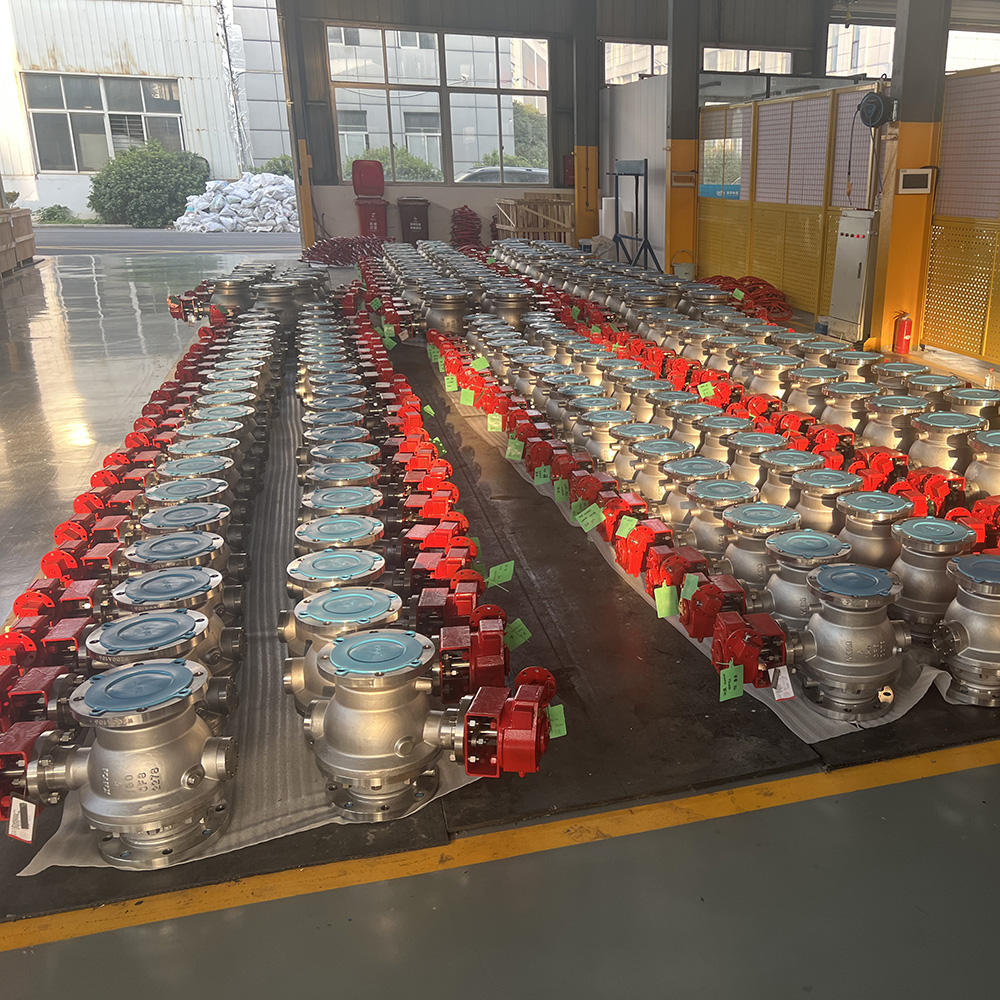
Gas transmission pipelines require continuous internal maintenance. Operators use devices called "pigs" to clean the pipes. They also use smart pigs to inspect wall thickness magnetically. Your valve selection directly impacts these pigging operations.
You must carefully navigate the bore sizing matrix. Manufacturers offer reduced bore and full bore specifications. Reduced bore units feature an internal opening smaller than the pipeline. They create flow restrictions. They cost less but limit your maintenance options.
You must specify a full bore trunnion ball valve for any mainline transmission section. This design perfectly matches the pipeline's internal diameter. It is strictly required for launching and receiving pipeline pigs. Smart inspection pigs require a completely smooth, unobstructed path. A reduced bore will trap the pig. This causes a dangerous blockage and forces a pipeline shutdown.
This full bore design offers a massive secondary benefit. It creates essentially zero pressure drop across the unit. The gas flows as if it were moving through a straight pipe. This efficiency minimizes energy loads on your compressor stations. It saves immense amounts of fuel gas over the pipeline's lifespan.
Installation requires special attention to metallurgy. You must consider transition pup pieces. Manufacturers factory-weld these short sections of pipe directly to the valve ends. They match the unit safely to the pipeline's exact wall thickness. This factory-controlled welding process eliminates on-site metallurgical risks. Field welders can then attach the pup pieces to the pipeline easily. They do not risk damaging the delicate internal seats with welding heat.
High-pressure gas is unforgiving. It exploits any weakness in your sealing materials. You must select seating components that withstand extreme velocities and abrasive contaminants.
Standard soft seats use materials like PTFE or Nylon. They offer excellent tight shut-off capabilities in clean environments. However, they have severe limits in gas transmission. High-velocity gas can easily blow out soft materials during opening and closing cycles. Pipeline scale and welding slag will gouge soft plastics instantly.
We strongly recommend advanced materials for difficult conditions. Use PEEK for higher temperature limits. You must upgrade to Metal-to-Metal Tungsten Carbide coatings for highly abrasive environments. Metal seats handle extreme high-pressure drops safely. They sheer right through sand and debris without losing their sealing integrity.
You cannot guess about safety standards. You must demand strict documentation from your vendors. Only shortlist manufacturers who provide the following certifications:
API 6D: This is the ultimate baseline standard for pipeline valves. It strictly governs design, manufacturing, testing, and documentation protocols.
API 607 / API 6FA: These dictate fire-safe design requirements. If an external fire melts the primary soft seats, a secondary metal-to-metal seal must take over. This prevents the pipeline gas from fueling the fire.
NACE MR0175 / ISO 15156: You must verify these material specifications if the gas contains hydrogen sulfide (sour gas). Sulfide stress cracking will destroy standard steel rapidly. NACE compliance ensures your metals survive these toxic environments.
Even the best seals experience wear over time. You should evaluate the necessity of secondary sealant injection fittings. Manufacturers install these on the stem and seat areas. If a primary seal gets scratched, operators can pump heavy synthetic grease into the fitting. This acts as an emergency backup mechanism. It provides temporary leak mitigation until you can schedule a proper shutdown for repairs.
The mechanical efficiency of your unit directly determines how you automate it. Actuators provide the raw mechanical force required to open and close the pipeline.
A high-quality trunnion ball valve maintains a highly stable torque profile. The trunnion shafts handle the pressure load safely. In contrast, floating equivalents experience massive torque spikes under high pressure. The actuator must fight the friction of the ball grinding against the seat.
This stable torque profile directly impacts your actuator selection. You can confidently size gas-over-oil, pneumatic, or electric actuators. Specifying a unit with a highly predictable torque curve prevents costly actuator over-sizing. Over-sized actuators cost more. They also risk breaking the valve stem if they apply too much force during a blockage.
You must factor in the long-term reliability risks of the equipment. Look beyond the metal body. Evaluate the entire supply chain and maintenance ecosystem.
First, verify the long-term availability of specific spare parts. You will eventually need replacement O-rings, springs, and seat rings. Ensure the manufacturer uses standardized, accessible parts.
Second, assess the reality of top-entry maintenance. Top-entry designs sound perfect on paper. However, pulling a heavy ball out of a pipeline manifold requires specialized lifting tools. Ensure your maintenance crews actually have the training to perform this in-line work safely.
Finally, demand complete vendor testing transparency. Do not accept units based on brochures alone. Require documented Factory Acceptance Testing (FAT) procedures. You need hard data proving the unit passed high-pressure hydrostatic and pneumatic seat tests before it ever leaves the factory floor.
Selecting a ball valve for high-pressure gas is never a commodity purchase. You are making a critical engineering decision. It requires aligning the body design, bore size, and material standards directly with your unique installation environment.
Procurement teams should adopt a strict shortlisting logic. First, narrow your vendor list based exclusively on verified API 6D credentials. Next, demand the availability of destructive and non-destructive testing records. Finally, evaluate their proven actuator integration capabilities.
We encourage engineers to take immediate action. Consult with your shortlisted manufacturers using a standardized engineering data sheet. You must comprehensively cover your flow media type, including sweet or sour gas designations. Detail your maximum working pressures, extreme temperature ranges, and strict pigging requirements. Clear communication upfront guarantees reliable pipeline operation for decades to come.
A: Specify metal seats when the gas stream contains high levels of abrasive particulates like sand or pipe scale. You should also choose them when operating temperatures exceed the thermal limits of standard polymers like PEEK or Nylon.
A: DBB provides a seal against pressure from both ends of the valve simultaneously, featuring a central bleed cavity. DIB provides two independent seals in one or both directions. You must check which specific configuration your facility safety protocol strictly requires.
A: While it virtually eliminates pressure drops by matching the pipe's internal diameter, minor frictional losses still occur. These losses are equivalent to a straight piece of pipe. Its primary engineering purpose remains ensuring completely unobstructed pipeline pig passage.
