


Views: 0 Author: Site Editor Publish Time: 2026-08-04 Origin: Site


Operating oxygen systems presents a severe operational reality. Whether handling liquid oxygen (LOX) or gaseous oxygen (GOX), ordinary flow control components pose massive risks. They can instantly become catastrophic ignition sources under high pressure or rapid flow velocity.
Precise throttling makes a globe valve essential for regulating complex oxygen service. However, this exact internal geometry causes significant vulnerabilities. The winding flow path makes it highly susceptible to adiabatic compression and particle impingement. Standard industrial valves simply cannot survive these volatile conditions without initiating a combustion event.
We developed this guide to provide engineers and procurement teams with an evidence-based specification framework. You will learn how to evaluate materials, enforce strict cleaning protocols, and execute safe installations. Applying these principles ensures absolute system safety and guarantees strict regulatory compliance for your facility.
Ignition Prevention: Standard valves are unacceptable; oxygen systems require materials with high ignition thresholds (e.g., Monel, specific stainless steels) and specialized internal geometries.
Absolute Cleanliness: Validated degreasing and cleaning to standards like ASTM G93 or CGA G-4.1 is non-negotiable to eliminate hydrocarbon fuels.
Vendor Accountability: Procurement must demand documented proof of cleanroom assembly, UV/black-light inspection, and proper double-bagged packaging before shortlisting.
Installation Rigor: Safe rollout requires strict adherence to flow direction protocols, gradual actuation procedures, and pre-installation purging to prevent adiabatic heat spikes.
Understanding oxygen system failures requires revisiting the fundamental fire triangle. A fire needs oxygen, fuel, and heat to ignite. In oxygen-enriched environments, the system already supplies the oxidizer. If a component introduces heat, the valve itself becomes the fuel. Using non-specialized valves invites catastrophic risks into your facility. They simply lack the engineered defenses necessary to prevent internal ignition.
Engineers must understand how normal valve operations generate intense, localized heat. We categorize these threats into three primary ignition mechanisms.
Adiabatic Compression: This phenomenon occurs through rapid pressurization. When an operator opens a valve too quickly, gas rushes into the downstream piping. The sudden compression generates extreme localized heat. Temperatures can spike beyond the auto-ignition point of internal polymers in milliseconds.
Particle Impingement: High-velocity gas acts like a sandblaster. It forces particulate matter through the system at dangerous speeds. Rust, sand, and weld slag strike the valve internals violently. These microscopic collisions create intense friction sparks. Those sparks easily ignite the surrounding metal.
Resonance & Vibration: Fluid flow sometimes creates acoustic oscillation within the valve cavity. These high-frequency vibrations generate severe thermal energy. Over time, resonance heating compromises internal seals and lowers the ignition threshold of the surrounding metals.
Modifying a standard off-the-shelf valve presents an unacceptable risk. Standard components utilize flammable lubricants and low-threshold alloys. You cannot simply clean a standard valve and call it safe. Specifying a purpose-built oxygen globe valve eliminates these systemic hazards. True safety requires engineered geometries that reduce turbulence and mitigate particle strikes entirely.
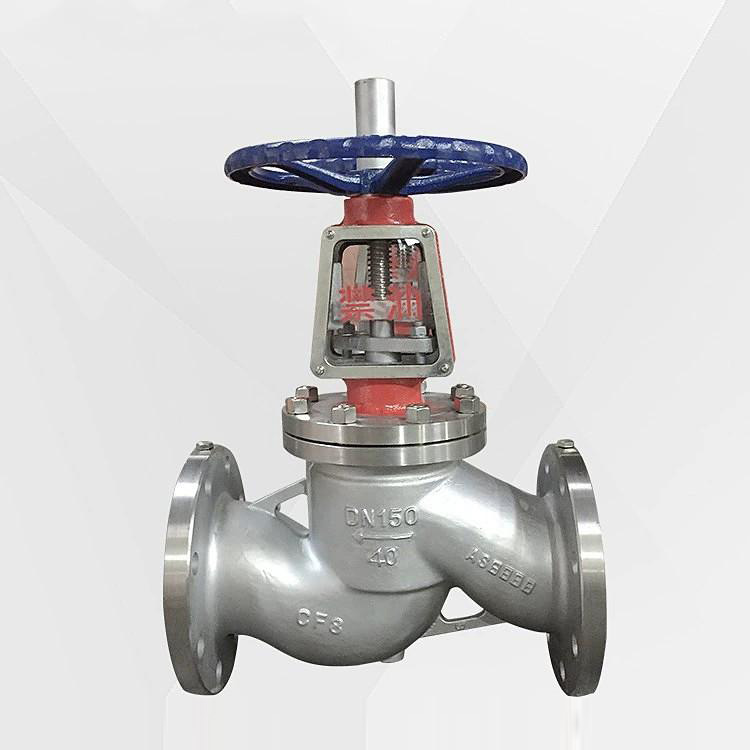
Evaluating solutions requires matching specific materials to exact system parameters. You must consider pressure, temperature, and fluid state. Liquid Oxygen (LOX) behaves very differently than Gaseous Oxygen (GOX). We rely on established industry guidelines, including AIGA standards and NASA combustion data, to dictate safe material limits.
Material Alloy | State Compatibility | Ignition Resistance | Primary Application |
|---|---|---|---|
Monel 400 | High-Pressure GOX | Exceptional | High-velocity oxygen throttling |
Inconel 600 | High-Pressure GOX / LOX | Very High | High-temp oxygen environments |
316L Stainless Steel | LOX / Low-Pressure GOX | Moderate | Cryogenic storage and piping |
Brass / Bronze | Low to Medium GOX | High | Standard industrial oxygen lines |
The core structural metals carry the highest responsibility for system safety. Choosing the wrong alloy often leads to catastrophic kindling chain reactions.
Copper Alloys & Nickel Alloys (Monel/Inconel): Engineers consider these the gold standard for high-pressure and high-velocity GOX applications. They offer exceptional ignition resistance. Even if particulate impingement creates a spark, Monel refuses to sustain combustion. This makes it ideal for internal trim components facing aggressive throttling.
Austenitic Stainless Steel (304/316): Implementation realities demand careful evaluation here. Stainless steel performs excellently for cryogenic LOX. It maintains high strength and ductility at freezing temperatures. However, you must observe strict velocity and pressure limits for GOX applications. High-velocity GOX can ignite stainless steel, causing it to burn violently.
Sealing an oxygen system requires extreme caution. Standard elastomers, like Nitrile or standard EPDM, pose massive ignition risks. They burn rapidly when exposed to high-pressure oxygen.
You must specify acceptable polymers carefully. PTFE and PCTFE offer excellent chemical inertness. However, you must account for their temperature limitations. They also carry extrusion risks under high pressure. Modern valve designs utilize specialized packing glands to capture these polymers securely. This prevents the seals from deforming or blowing out during sudden pressure spikes.
Compliance guarantees trustworthiness. Manufacturers must follow exact procedures to render components safe for deployment. Even a microscopic fingerprint leaves enough hydrocarbon residue to trigger an explosion. Strict adherence to standards like ASTM G93 and CGA G-4.1 remains non-negotiable.
Eliminating hydrocarbon fuels requires a systematic, multi-stage approach. Facilities must execute these steps flawlessly.
Mechanical Descaling: Technicians remove coarse surface contaminants. This includes rust, scale, and heavy weld slag.
Alkaline Washing: Components enter heated ultrasonic baths containing specialized alkaline solutions. This breaks down stubborn greases.
Solvent Degreasing: Approved, non-flammable solvents strip away remaining hydrocarbon films at the molecular level.
Pure Water Rinsing: Technicians flush the parts with deionized water to remove all chemical detergents.
Thermal Drying: Parts dry in vacuum ovens or under heated, oil-free nitrogen flows.
You cannot trust the cleaning process without rigorous testing. Technicians rely on multiple validation methods to ensure absolute safety.
Direct visual inspection under bright white light spots obvious debris. UV (black light) fluorescence testing exposes hidden dangers. Under ultraviolet light, residual hydrocarbon oils glow brightly. Any fluorescence demands immediate recleaning. Finally, technicians use specialized wipe testing. They wipe internal surfaces with lint-free cloths and inspect them for microscopic discoloration.
Cleaning means nothing if recontamination occurs during assembly. We mandate ISO-certified cleanroom assembly for all critical components. Technicians wear lint-free suits and specialized gloves.
Compliant packaging seals the cleanroom environment inside the bag. Technicians purge the assembled valve with dry, oil-free nitrogen. They cap the ends securely. Finally, they double-seal the unit in heavy-duty polyethylene bags. Every compliant package must feature a highly visible label stating: "Cleaned for Oxygen Service."
Field experience reveals a harsh truth. Many flawless components fail due to poor installation practices. We provide these hard-learned lessons to help you prevent post-procurement disasters. Handling a pristine oxygen service globe valve requires disciplined execution on the job site.
Installation discipline begins the moment the crate arrives. You must inspect the packaging integrity immediately upon delivery. Reject any compromised bags. A torn polyethylene bag means ambient shop air has contaminated the valve.
During pipe fitting, teams must maintain strict clean-tool protocols. Dedicate specific wrenches and tools exclusively for oxygen work. Technicians must maintain clean-hands protocols or wear fresh, lint-free gloves. A single drop of sweat or machine oil can compromise the entire installation.
Correct orientation dictates long-term survival. Always discuss optimal flow orientation with the manufacturer. Typically, we recommend a flow-under-the-plug orientation. This specific geometry minimizes direct particle impingement on critical seating surfaces. It deflects debris safely through the flow path.
You must also address the operational mandate for slow-opening procedures. Manual operators must turn handwheels gradually. For automated systems, utilize bypass loops to equalize pressure slowly. This gradual actuation completely eliminates the adiabatic shock that causes sudden ignition.
Construction always leaves microscopic debris behind. Weld spatter, pipe thread tape, and dust settle inside the piping. You must perform comprehensive system purging before introducing oxygen.
Blow down the upstream piping vigorously. Use large volumes of oil-free nitrogen or filtered dry air. This high-velocity purge clears construction debris effectively. Skip this step, and you guarantee particle impingement the moment you introduce actual oxygen.
Procurement teams carry immense responsibility. You need a concrete checklist to evaluate vendor credibility accurately. Never base this decision on lead time alone. Use this evaluation logic to filter out unqualified suppliers quickly.
Demand exhaustive paperwork. Legitimate manufacturers track every heat number and process step.
Material Test Reports (MTRs): You need exact chemical compositions for the body, trim, and seals.
Certificates of Compliance: The vendor must certify oxygen cleaning procedures. They must reference specific standards like ASTM G93, CGA G-4.1, or AIGA guidelines explicitly.
Assembly Records: Request sign-offs detailing the specific cleanroom technician and validation methods used.
Do not trust outsourced cleaning operations. Verify the existence of in-house cleanrooms. A Class 100,000 (ISO Class 8) cleanroom represents the minimum acceptable standard. Better facilities operate Class 10,000 cleanrooms.
Assess their quality assurance testing capabilities. For GOX, demand baseline helium leak testing to ensure absolute shell integrity. For LOX applications, vendors must possess in-house cryogenic testing bays. They need to prove seat tightness at operating temperatures, not just room temperature.
Watch out for vendors who dodge difficult engineering questions. A credible manufacturer knows their limitations perfectly.
Warn your teams against vendors who cannot articulate the strict velocity limits of their stainless steel designs. If they offer 316SS for high-pressure GOX without discussing impingement risks, disqualify them. Furthermore, avoid manufacturers who obfuscate their cleaning solvent data. You have every right to know exactly which chemicals touched your equipment.
Specifying a globe valve for oxygen service is an exercise in absolute risk elimination. Success requires precise alignment between advanced material science, rigorous chemical cleaning, and disciplined field installation. Standard industrial components have no place in these volatile environments. Failing to respect the fire triangle will inevitably lead to catastrophic system failure.
Take immediate action to secure your facility. We encourage you to audit your current oxygen systems for compliance today. Download a technical specification checklist to standardize your future procurement processes. If you face complex velocity or pressure challenges, contact an expert engineering team for a comprehensive compliance review of your upcoming valve requirements.
A: A standard valve uses common alloys, flammable lubricants, and typical elastomers. An oxygen service valve features high-ignition-threshold materials like Monel or specially engineered stainless steel. It undergoes rigorous chemical degreasing to remove all hydrocarbons. Finally, technicians assemble it in an ISO-certified cleanroom to ensure absolute internal purity.
A: Yes, but with strict limitations. Austenitic stainless steels perform excellently for cryogenic liquid oxygen (LOX) and low-pressure gaseous oxygen (GOX). However, high-pressure GOX creates severe velocity risks. Under high velocity, stainless steel can ignite. High-pressure GOX applications typically require Monel or brass to ensure safety.
A: Failing to properly degrease the component leaves microscopic hydrocarbon films behind. In a pure oxygen environment, these oils and greases act as highly reactive fuels. When subjected to friction or adiabatic compression, these residues auto-ignite instantly. This sparks a catastrophic metal fire that destroys the valve and piping.
A: Properly sealed, heavy-duty polyethylene bags maintain cleanliness for extended periods in climate-controlled storage. However, shelf life depends heavily on storage conditions. If the bag tears, loses its nitrogen purge, or sits in high-humidity environments, the internal purity is compromised. In such cases, you must re-clean the valve before installation.


