


Views: 0 Author: Site Editor Publish Time: 2026-03-30 Origin: Site


You use a gate valve to stop or start the flow in a pipeline. This valve works by moving a gate up and down, giving you either a full opening or a secure shut-off. People choose gate valves because they help you control water, oil, gas, and chemicals safely. These valves last a long time, even in tough places like power plants or water systems. You can count on them for reliable performance and strong sealing in many industries.
A gate valve works by moving a gate up or down. It is used to start or stop flow all the way. You should not use it to adjust flow.
Gate valves last a long time and work well. They are good for places with high pressure, like power plants and oil pipelines.
It is important to take care of your gate valve. Check and clean it often so it works well and lasts longer.
Pick the right material for your gate valve. Think about the fluid and how it will be used. This helps stop rust and damage.
Learn how gate valves are different from other valves. Some other types are ball valves and globe valves. This helps you choose the best one for your needs.
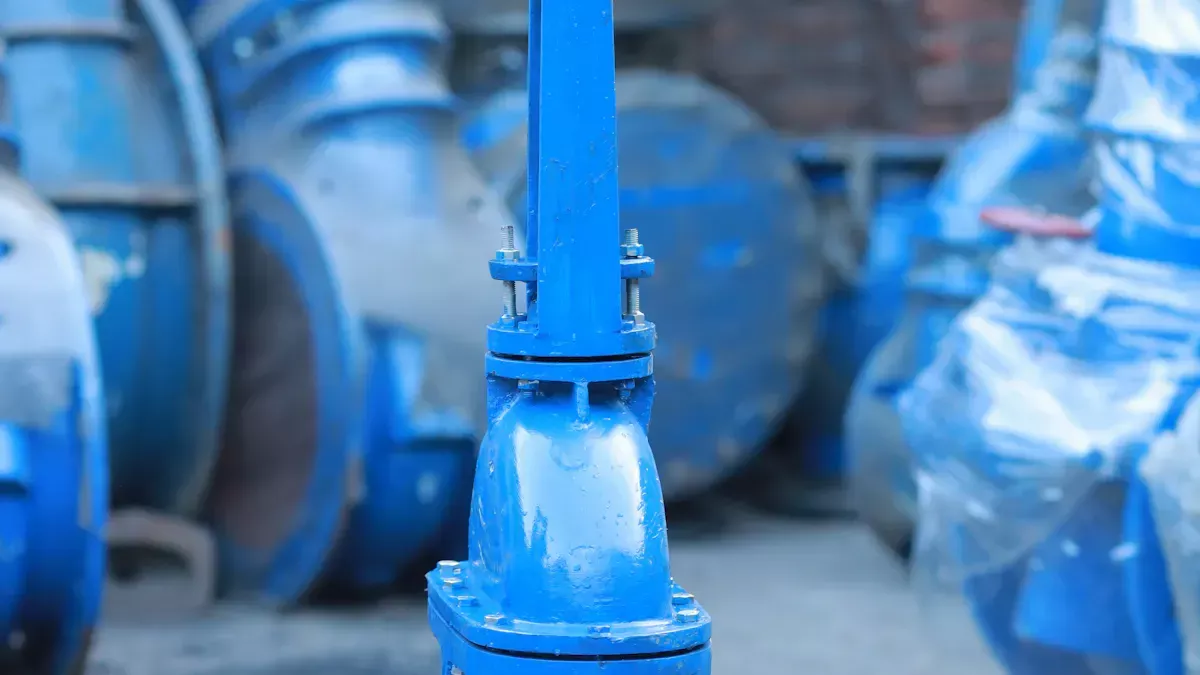
A gate valve is a tool that controls if liquids or gases can move in a pipe. When you turn the handle, the gate inside goes up or down. If the gate goes up, fluid can move through. If the gate goes down, it blocks the flow. You do not use a gate valve to change how much fluid moves. You use it only to start or stop the flow.
Gate valves must follow rules made by groups like ISO, ASME, and API. These rules help keep the valve safe and make it last longer. The rules say how to build the valve, what materials to use, and how much pressure it can take.
A gate valve opens or closes the flow path by moving in a straight line.
When you open the valve, the gate lifts and fluid moves with little resistance.
When you close the valve, the gate drops and blocks the flow, making a tight seal.
Here is a quick comparison between gate valves and other shut-off valves:
Feature | Shut-Off Valves | Gate Valves |
|---|---|---|
Function and Purpose | Complete shutoff of flow | Allow or stop flow with a gate |
Design and Operation | Quarter-turn for fast action | Multi-turn, slower operation |
Speed of Operation | Fast | Slow |
Shut-Off Mechanisms | Quick and immediate | Gradual, needs more turns |
Leakage and Sealing | Tight seal, less leakage | More prone to leaks |
Applications | Fire systems, marine, new plumbing | Power plants, mining, water treatment |
The main job of a gate valve is to let fluid flow or stop it in a pipe. The valve works best when it is all the way open or all the way closed. You do not use it to change the speed of the flow.
Gate valves help you shut off parts of a pipeline for repairs or emergencies.
You see gate valves in refineries, offshore platforms, and storage places.
The valve can handle high pressure and heat, so it works well in hard jobs.
People use gate valves for wellhead control, pipeline sections, tank farms, and emergency stops.
The valve gives you good flow isolation with little pressure loss.
Gate valves make a tight seal and let all the fluid move through, which is important for crude oil, natural gas, and slurry.
When you need to open or close a pipeline fully, a gate valve gives you control. This valve is good for tough jobs and helps keep the flow safe and steady.
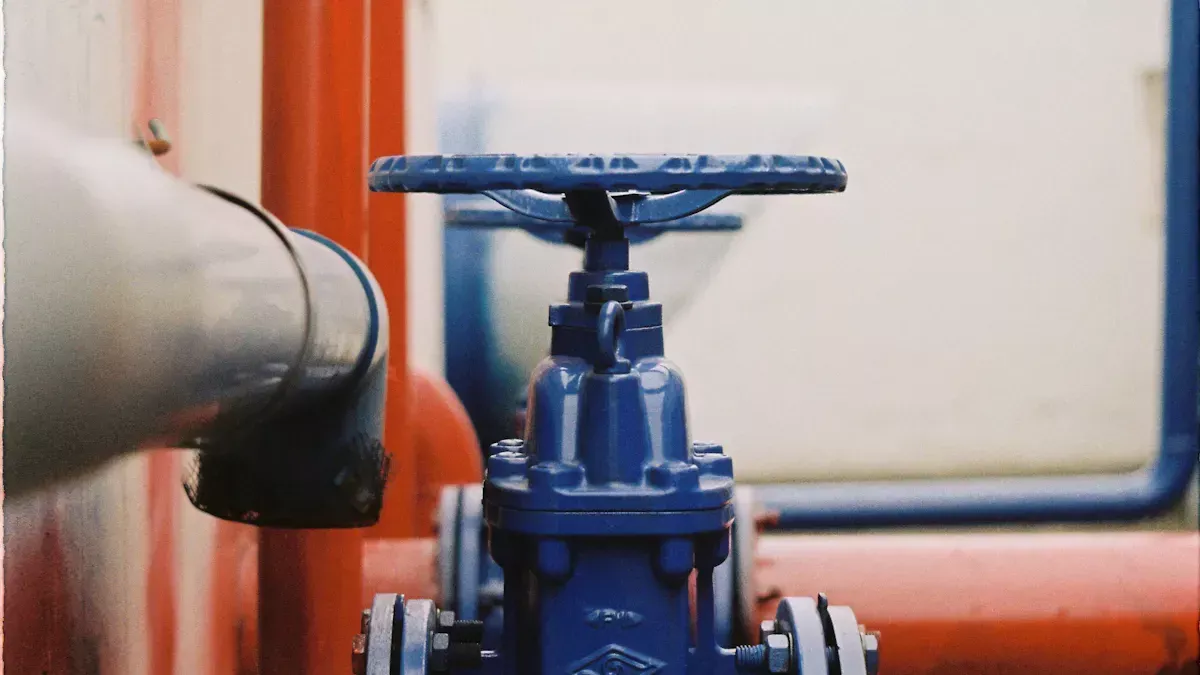
When you use a gate valve, you control the flow by turning a handwheel. This action moves a gate or wedge inside the valve body. As you turn the handwheel, the stem either lifts or lowers the gate. If you lift the gate, you create a clear path for fluid to move through the valve. If you lower the gate, you block the passage and stop the flow.
You can find two main types of gate valve designs. In a rising stem gate valve, the stem moves up as you open the valve, so you can see if the valve is open or closed. In a non-rising stem gate valve, the stem stays in place while the gate moves up and down inside the valve. This design works well in tight spaces where you do not have much room above the valve.
Tip: You can spot a rising stem gate valve by watching the stem move up when you turn the handwheel.
The main parts that help with this operation include:
Valve body
Gate
Stem
Handwheel
Valve seat
Bonnet
Stuffing box
Gland flange
Stem nut
Each part works together to make sure you get smooth and reliable operation every time you use the valve.
A gate valve gives you a simple way to start or stop the movement of fluid in a pipeline. When you open the valve, the gate lifts out of the way. This action allows fluid to flow straight through with almost no resistance. You get a full opening, so the fluid does not slow down or face much pressure loss.
When you close the valve, the gate drops down and fits tightly against the valve seat. This seal stops the fluid from moving any further. You use a gate valve when you need to let all the fluid pass or stop it completely. You do not use this valve to adjust how much fluid flows. If you try to keep the valve partly open, the gate and seat can wear out faster.
You can count on a gate valve for strong shut-off and smooth operation. This makes it a good choice for water, oil, gas, and other fluids in many industries. You get reliable control, even when the system faces high pressure or tough conditions.
Note: Always open or close a gate valve fully to keep it working well and to avoid damage.
The body is the main part of a gate valve. It holds all the other parts together. The body keeps the pressure inside the valve. It must be strong because it faces heat and pressure. Different jobs use different body materials. Stainless steel lasts long and does not rust. Cast iron is strong but not as tough. Bronze and brass are easy to shape and resist damage. PVC is used for lighter work. Cast carbon steel is very tough and can handle hard hits.
Body: Holds the gate, seat, and other parts.
Bonnet: Covers and protects the stem and gate.
Gate: Moves up and down to control flow.
Stem: Connects the gate to the actuator.
Seat: Provides the sealing surface.
Tip: Always check what your gate valve is made of. Make sure it matches the pressure and heat your system needs.
The gate and stem work together to control flow. The gate moves up to let fluid pass. It moves down to block the flow. The stem links the handwheel or actuator to the gate. When you turn the handwheel, the stem moves the gate. Some stems rise to show if the valve is open or closed. Non-rising stems save space in tight spots.
Component | Function |
|---|---|
Gate | Moves up and down to control fluid flow. Stops flow when lowered, allows flow when raised. |
Stem | Connects actuator to gate, transmits movement to open or close the valve. |
Seals stop leaks and keep the valve tight. Seats can be made from metal or soft materials. Good seals give you a tight shut-off, even with high pressure. Actuators help you open and close the valve. Pneumatic actuators let you control the valve automatically. Double-acting actuators use air to open and close the valve. Single-acting actuators use air to open and a spring to close. This is important for safety.
Pneumatic actuator: Automates valve operation.
Double-acting: Uses air for both opening and closing.
Single-acting: Uses air to open, spring to close.
Note: Seals and actuators help the valve work better and keep things safe in tough places.
Gate valves are used in many places with pipes. Factories and power plants use steel gate valves for steam. Wastewater plants use iron gate valves for dirty water. Chemical plants need stainless steel valves to stop rust from chemicals. Waterworks use cast iron for big pipes and bronze for small pipes. Gate valves help control water during filtering, pumping, and treatment. They let you turn off parts of the system for repairs or emergencies. Gate valves keep water moving safely and well.
Application Area | Description |
|---|---|
Factories and Power Plants | Use steel gate valves for medium pressure in steam systems. |
Wastewater Plants | Employ iron gate valves for managing dirty water. |
Chemical Plants | Utilize stainless steel valves to prevent rust from harsh chemicals. |
Waterworks | Use cast and ductile iron for large pipes; bronze for smaller pipes. |
Gate valves are needed in water and wastewater plants.
They control chemicals, sludge, and water flow.
They work well during filtering, pumping, and treatment.
Gate valves are important for oil, gas, and steam systems. These valves give strong on and off control for safety. In oil and gas pipes, gate valves handle high pressure and last a long time. You find them in wellhead setups and storage tanks. Chemical plants use gate valves for fluids that can cause rust. The valves fight off chemical damage and keep things safe. Gate valves help control steam, oil, and gas flow every day.
Gate valves are needed for on and off fluid control.
They handle high pressure and last in oil and gas pipes.
Gate valves control harsh fluids in chemical plants.
People pick gate valves because they are strong and last long. Suzhou Kizi Valve Co., Ltd. uses special seals for tight shut-off. You can pick from many materials like stainless steel or ductile iron. The company has different designs, such as rising stem, non-rising stem, and knife gate valves. Rising stem types show if the valve is open or closed. Non-rising stem types fit in small spaces. Knife gate valves are good for thick or slurry fluids. These valves work smoothly and do not slow the flow much. They can handle hard jobs and last for years.
Tip: Pick the right gate valve design for your system. This helps keep water, oil, or gas moving safely and easily.
Gate valves have many good points. They can stop water, oil, or gas from moving. This makes them useful in power plants and factories. Gate valves work well with high heat and pressure. They are great for hard jobs like steam control. The valve is made from strong materials like cast iron, stainless steel, or bronze. These materials help the valve last a long time. They also stop rust and damage. Because of this, you do not need to replace the valve often. This saves you money on repairs.
You can use gate valves in many tough places. They work with slurries, rough fluids, and chemicals. The valve’s design helps stop leaks. If you take care of your valve, it will last for years. Here is a table that shows how long a gate valve can last in different places:
Operating Conditions | Lifespan Range |
|---|---|
Moderate conditions (e.g., clean water) | 10–15 years |
Controlled environments (e.g., refineries) | 15–25+ years |
Poorly maintained or harsh conditions | 3–5 years |
Tip: Check, clean, and oil your valve often. This helps it last longer and work better.
There are some problems with gate valves:
If the valve is not all the way open, fluid resistance goes up. This can use more energy and make the system less efficient.
You might need to push harder to open or close the valve.
The sealing parts can wear out or rust, which can cause leaks.
The valve has many parts, so it can cost more to make and fix.
Sometimes, the valve does not work well in very hard jobs or special rules.
Some common problems are stem breakage, gate jamming, or leaks from worn seals. You can stop many of these problems by checking your valve often, keeping it clean, and fixing it when needed.
Note: Always check and take care of your valve on a schedule. This keeps it safe and working well.
You sometimes have to pick a gate valve or a ball valve. Each one works best for different jobs. A gate valve has a gate that moves up and down. This starts or stops the flow. A ball valve has a round ball with a hole in it. You turn the handle to open or close it fast.
Here is a table that shows the main differences:
Feature | Gate Valves | Ball Valves |
|---|---|---|
Flow Control | Gradual flow control, suitable for high pressure | Quick shutoff, ideal for emergency situations |
Sealing Performance | Prone to leakage over time due to wear | Superior sealing with airtight design |
Maintenance Requirements | Higher maintenance needs, frequent inspections | Lower maintenance needs, longer service life |
You must turn a gate valve many times to open or close it. This helps you control flow in high-pressure pipes.
You only need to turn a ball valve a little to open or close it. This makes it quick and easy for emergencies.
A gate valve usually costs less at first, especially for big pipes. A ball valve costs more, but it lasts longer and needs less fixing.
You may wonder how a gate valve is different from a globe valve. Both can control flow, but they work in their own ways. A gate valve lets fluid move straight through, so you lose little pressure. A globe valve has a winding path inside, which slows the flow and drops more pressure.
Look at this table for a quick comparison:
Feature | Gate Valve | Globe Valve |
|---|---|---|
Pressure Drop | Minimal pressure drop due to straight-through design | Higher pressure drop due to tortuous flow path |
Application Suitability | Best for on/off isolation applications | Ideal for throttling and precise flow control |
Design | Simple, unobstructed flow path | Complex design for flow modulation |
Maintenance | Simpler maintenance, less wear when used correctly | More frequent maintenance due to wear during throttling |
Directionality | Bi-directional | Typically unidirectional, requires correct orientation |
Energy Efficiency | More energy-efficient for isolation tasks | Higher energy loss due to resistance in flow |
Use Cases | Water systems, oil and gas pipelines | Steam regulation, temperature control, process balancing |
Use a gate valve when you want to open or close the flow all the way.
Use a globe valve when you need to adjust the flow carefully.
A gate valve is not good for changing flow speed. It works best when fully open or closed. A globe valve is better for fine-tuning how much fluid moves.
A gate valve is special because of its design. The shut-off part moves up and down across the flow. This lets you stop the flow completely. When open, fluid moves through with almost no resistance. The strong build means you can use it in many places, like water or oil and gas pipes.
The shut-off part moves across the flow.
You get full shut-off of the flow.
The valve gives very little resistance to fluid.
The tough build makes it good for hard jobs.
Tip: Pick a gate valve if you need strong shut-off and low pressure loss in your system.
You use a gate valve to start or stop flow in a pipe. It is easy to use and gives strong control. When you pick a valve, you need to think about a few things. The table below shows what is important:
Factor | Description |
|---|---|
Operating Conditions | Check the temperature, pressure, and type of fluid. |
Material Compatibility | Choose materials that do not rust and fit your process. |
Design Specifications | Look at how the valve seals and how it is built. |
Installation Considerations | Make sure the valve fits in your space and is facing the right way. |
Maintenance Requirements | Pick a valve that is easy to fix and has spare parts. |
Automation Features | Think about if you need automatic or remote control. |
Suzhou Kizi Valve Co., Ltd. gate valves work well in hard places. They last long, seal tightly, and move smoothly for many uses.
You use a gate valve to start or stop the flow in a pipeline. It gives you a full opening or a tight shut-off. You do not use it to control how much fluid moves.
You can look at the stem. If you see the stem rising, the valve is open. If the stem is down, the valve is closed. Non-rising stem types may need you to check the handle position.
You find gate valves in water systems, oil and gas pipelines, and factories. They work well in places that need strong shut-off and can handle high pressure or tough fluids.
A gate valve can last many years if you take care of it. In clean water, it may last 10–15 years. In harder jobs, it may last less time. Regular checks help it last longer.
You should not use a gate valve to adjust flow. It works best when fully open or fully closed. Using it halfway can wear out the parts and cause leaks.


