


Views: 0 Author: Site Editor Publish Time: 2026-06-02 Origin: Site


Specifying flow control for oil and gas pipelines requires a careful balance. Engineers must constantly weigh bubble-tight shutoff reliability against overall project procurement costs. Enter the floating flange ball valve. It serves as a highly durable, quarter-turn isolation device. The design is heavily optimized for low-to-medium pressure applications. In these setups, internal fluid pressure naturally pushes the internal components together, aiding the sealing mechanism.
This guide delivers a strict, compliance-driven framework for pipeline engineers and procurement teams. We will walk you through evaluating different port types, selecting appropriate seat materials, and understanding essential fail-safe designs. You will learn exactly how to meet operational demands without over-specifying components. By following these steps, you can ensure safe, efficient, and compliant pipeline operations.
Sizing Economics: Opting for a reduced port over a full port can yield ~30% cost and weight savings, provided line pigging is not required.
Fire-Safe Compliance: True "Fire Safe" designations require API 607 testing, relying on a secondary metal-to-metal seal engagement if soft polymers burn away.
Material Constraints: HNBR is preferred for sour gas (H2S), while standard FKM (Viton) must be strictly avoided in high-temp steam or ammonia environments.
Actuation Margins: Accurate actuator sizing demands calculating breakaway torque based on fluid viscosity, with a minimum 1.5x safety factor for pneumatic systems.
Installation Risks: Valve bodies must be kept in the "fully open" position during welding to prevent catastrophic heat deformation of the soft seats.
Understanding the internal mechanics of a valve dictates its proper application in the field. The floating mechanism features a simple yet highly effective design. The ball remains suspended in the fluid rather than being rigidly fixed to a bottom shaft. Line pressure physically pushes the unattached ball downstream. This movement forces the ball directly against the downstream seat, creating a reliable, bubble-tight seal. The higher the upstream pressure, the tighter the downstream seal becomes.
These valves have specific ideal deployment scenarios. They perform best in systems experiencing low-to-medium pressure drops. Engineers typically specify them for smaller pipe diameters, usually under 8 inches. Their straightforward construction makes them highly durable and easier to maintain in these tighter parameters.
However, the design carries strict operational limitations. You must use them strictly for on/off isolation duties. You cannot use them for flow throttling. Leaving the valve in a semi-open state allows high-velocity fluid to bypass the ball. This intense, focused flow will quickly erode the soft polymer seats. Over time, this erosion ruins the sealing capability and leads to internal leakage.
You must know the exact evaluation criteria for upgrading your hardware. When do you abandon the floating design? You step up to a trunnion-mounted oil gas ball valve when high-pressure lines exceed 20 bar. You also make this switch for large pipe diameters. In massive pipelines, the sheer surface area of a floating ball creates unmanageable breakaway torque, requiring the anchored stability of a trunnion design.
Selecting the right port configuration significantly impacts both hydraulic performance and procurement budgets. Engineers must evaluate the necessity of pipeline maintenance tools against the physical footprint of the valve.
A full port valve features an internal bore matching the internal diameter of the connecting pipeline. Because the flow path remains unrestricted, it generates zero pressure drop across the valve body. This configuration is a mandatory compliance item for many midstream transmission networks. Specifically, API 6D pipeline applications require full port designs wherever mechanical "pigging" is necessary. Pipeline operators send cleaning or inspection pigs through the line, and any reduction in bore size would trap these essential tools.
A reduced port valve features an internal bore downsized by one standard pipe size compared to the flanges. Because the fluid must squeeze through a smaller opening, it induces a slight, calculable pressure drop. Despite this hydraulic penalty, it presents a massive business case for specific networks. A reduced port design offers an average 30% reduction in total cost and physical weight. They are absolutely ideal for refined product transmission lines where mechanical pigging is absent.
Feature | Full Port | Reduced Port |
|---|---|---|
Internal Bore | Matches pipeline ID | Downsized by one pipe size |
Pressure Drop | Zero | Slight (Calculable) |
Pigging Compatibility | Yes (Mandatory for API 6D) | No |
Weight & Cost | Baseline | ~30% Reduction |
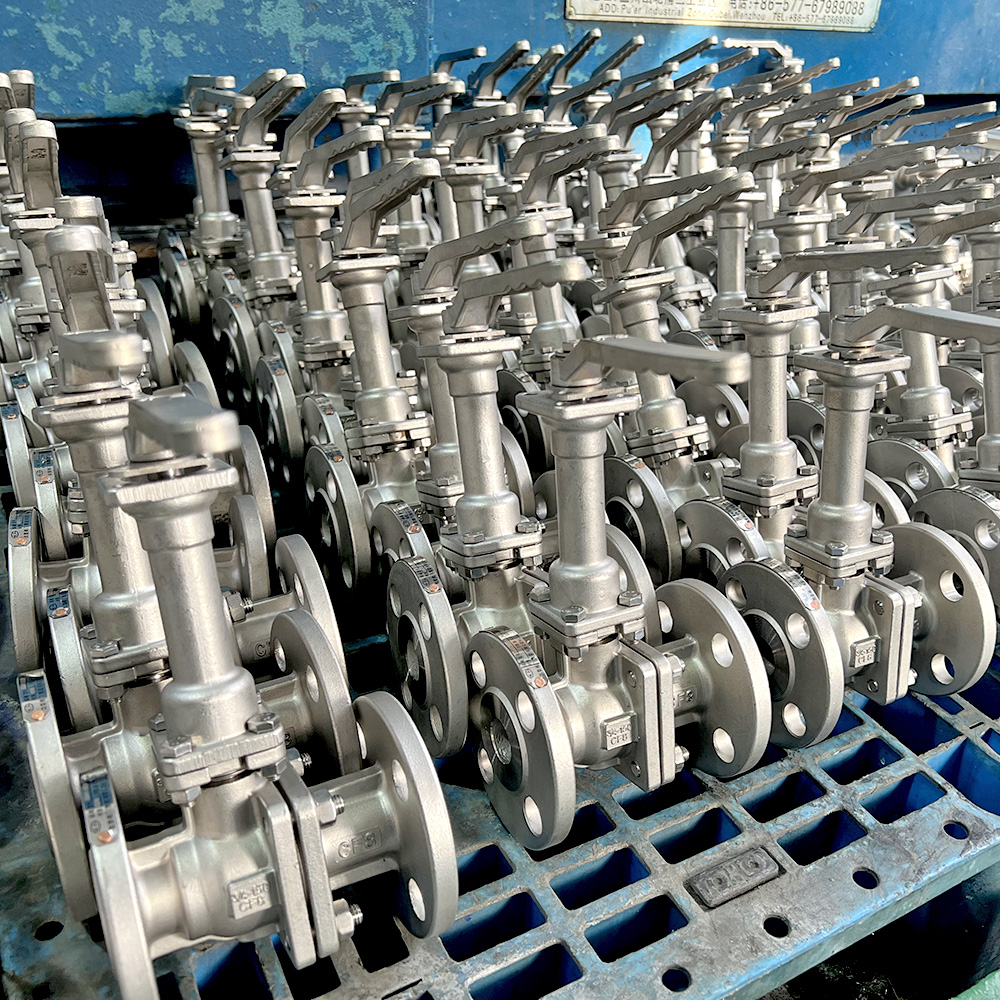
Valve failure usually originates at the soft seat or elastomeric seals. Matching the internal polymer chemistry to the pipeline media prevents catastrophic blowouts and silent internal leaks.
PTFE (Polytetrafluoroethylene) remains the industry standard. It offers broad chemical resistance and performs reliably up to 400°F. For slightly harsher conditions, manufacturers blend it into R-PTFE (glass-reinforced PTFE), bumping the thermal limit to 450°F while increasing physical wear resistance. However, standard PTFE suffers from cold flow under extreme stress. For elevated pressure and temperature thresholds, you must switch to PEEK (Polyether Ether Ketone). PEEK is a high-performance polymer stable up to 550°F. It fiercely resists the extrusion and creep common in standard PTFE.
Sour gas presents a unique danger to elastomer components. When pressure drops rapidly, gas trapped inside the rubber rapidly expands. This causes explosive decompression, physically tearing the O-ring apart. For highly volatile flange ball valve applications dealing with H2S, HNBR (Hydrogenated Nitrile Butadiene Rubber) is the preferred choice. It possesses excellent explosive decompression resistance and resists acid gas degradation.
Engineers must actively avoid incorrect material pairings. This negative checklist highlights common chemical traps:
FKM (Viton): You must strictly warn against using FKM in pipelines handling ammonia, polar solvents, or high-temperature steam. These media will chemically destroy Viton.
Abrasive Slurries: Abandon soft polymers entirely if the media contains highly abrasive particulates. Specify metal-to-metal seats instead to prevent the media from grinding away the soft seal.
Industrial safety mandates demand passive mechanical safeguards. Regulatory bodies like API (American Petroleum Institute) provide the testing frameworks to ensure valves fail safely during catastrophic events.
A true "Fire Safe" designation is not merely about using fire-resistant paints. It involves a strict physical transition tested under API 607. We call this the "Before Fire / After Fire" transition. During standard operation, the soft polymer seat maintains the primary seal. If a facility fire occurs, the extreme heat melts this polymer seat entirely. Once the polymer burns away, the downstream pipeline pressure physically forces the floating ball into a secondary metal conduit. This engages a metal-to-metal seal. While it may not be 100% bubble-tight, it successfully prevents massive combustible leaks from feeding the fire.
The valve stem connects the external actuator to the internal ball. API 608 dictates rigid stem security standards. The requirement mandates stem torsional strength to be at least two times the maximum operating torque. This prevents the stem from snapping if the ball seizes. Furthermore, the standard details the necessity of blow-out proof stem designs. Manufacturers machine an integral collar directly onto the bottom of the stem. Because the stem inserts from the inside of the valve body, internal line pressure pushes the collar up against the body wall, physically preventing the pressure from ejecting the stem like a projectile.
Friction from high-velocity oil or gas generates static electricity on the floating ball. Because polymer seats act as electrical insulators, this static charge cannot naturally ground itself to the pipeline. Engineers implement a dual grounding design (stem-to-ball, stem-to-body) utilizing small spring-loaded metal balls. This ensures constant electrical continuity, safely dissipating static discharge away from highly flammable transmission lines.
Automating a pipeline requires perfectly matched pneumatic or electric actuators. An undersized actuator will stall, leaving the line open during an emergency. An oversized actuator wastes capital and risks snapping the valve stem.
First, you must understand breakaway torque. This represents the absolute highest rotational force required to unseat a closed valve. Once the ball begins turning and fluid enters the cavity, the required torque drops significantly. Breakaway torque dictates the baseline for all actuator sizing.
Several distinct variables impact this torque metric:
Differential Pressure: Higher upstream pressure pushes the ball harder against the downstream seat. Tighter seals create more mechanical friction.
Media Characteristics: Lubricating oils naturally coat the ball, drastically decreasing operational torque. Conversely, high-viscosity crude oil or sticky media significantly increases it.
To calculate the required actuator output, engineers follow a specific selection logic:
Determine the manufacturer's Base Torque rating for the specific size and pressure class.
Multiply the Base Torque by the Fluid Factor (e.g., 0.8 for clean lubricating oil; 1.5 for severe crude).
Multiply that result by the Service Frequency Factor (valves sitting dormant for months require more force to break the initial seal).
As a strict engineering rule of thumb, always apply a 1.5x safety multiplier for pneumatic actuator specification. This ultimate margin prevents stalling under maximum unexpected load conditions.
Even the most perfectly specified hardware will fail if installed incorrectly. Field execution matters just as much as engineering selection.
Many pipeline segments utilize socket-weld or butt-weld connections. When welding a floating flange ball valve into the line, it must remain in the "fully open" position. Closing it exposes the spherical face of the ball to weld spatter. Furthermore, welding heat travels quickly down the metal pipe into the valve body. We strongly recommend wrapping the center valve body with thick wet rags. This absorbs excess heat and protects the internal polymer seats from catastrophic melting.
Polymer seats can mold themselves into the microscopic imperfections of the ball if left stationary for extended periods. This risk leads to valves "freezing" in place. To combat seat creep, facilities must mandate a strict maintenance schedule. Operators should cycle the valve (fully close, then fully open) at least once per month. This clears debris and keeps the polymer flexible.
When you rotate the ball to the closed position, a small volume of fluid becomes trapped in the center cavity. If the pipeline experiences extreme thermal expansion from sun exposure, or freezing temperatures in winter, this trapped fluid expands. The resulting pressure can crack the metal valve body. We recommend specifying pressure relief designs (like self-relieving seats or cavity relief holes) for pipelines subject to severe ambient temperature fluctuations.
Proper specification centers on a reliable decision framework. You must match the port configuration to the mechanical pigging requirements of your line. You must match the internal seat and elastomer chemistry directly to the aggressiveness of the media. Finally, you must align the testing standards, such as API 607 and API 608, to your specific site safety mandates.
As a next step for procurement teams, do not rely solely on generalized temperature limits. Consult the exact pressure-temperature (P-T) rating charts for your specific valve body material and seat polymer combination. Cross-reference these charts against your maximum operating conditions before finalizing the bill of materials. Taking these disciplined steps guarantees long-term pipeline safety and operational continuity.
A: Ball valves are quarter-turn isolation devices designed strictly for fully open or fully closed states. Throttling in a semi-open state causes high-velocity fluid to squeeze through a narrow gap. This intense flow permanently erodes the soft polymer seats. Once eroded, the valve can no longer achieve a tight seal when fully closed.
A: It is not just fire-resistant material; it is a tested mechanical failsafe defined by API 607. Under intense heat, the primary soft polymer seat melts entirely. The line pressure then physically forces the ball into a secondary metal rim. This metal-to-metal contact assumes the sealing function, preventing massive combustible leaks during a fire.
A: Under high pressure and high temperatures, standard PTFE is subject to cold flow (creep) and physical extrusion. It loses its shape under stress. PEEK is a much harder, high-performance engineering polymer. It maintains mechanical stability and resists extrusion under these intense, elevated stress combinations, vastly extending the operational lifespan.
